The mind is a wonderful storyteller.
It constructs elaborate narratives about who we are, what we deserve, what has been done to us, what the future holds. It rehearses conversations that have not yet happened, replays wounds that are long past, builds entire architectures of worry and hope and fear. And then it invites us to live inside these stories as though they were reality itself.
Most of us accept the invitation without even noticing we have done so.
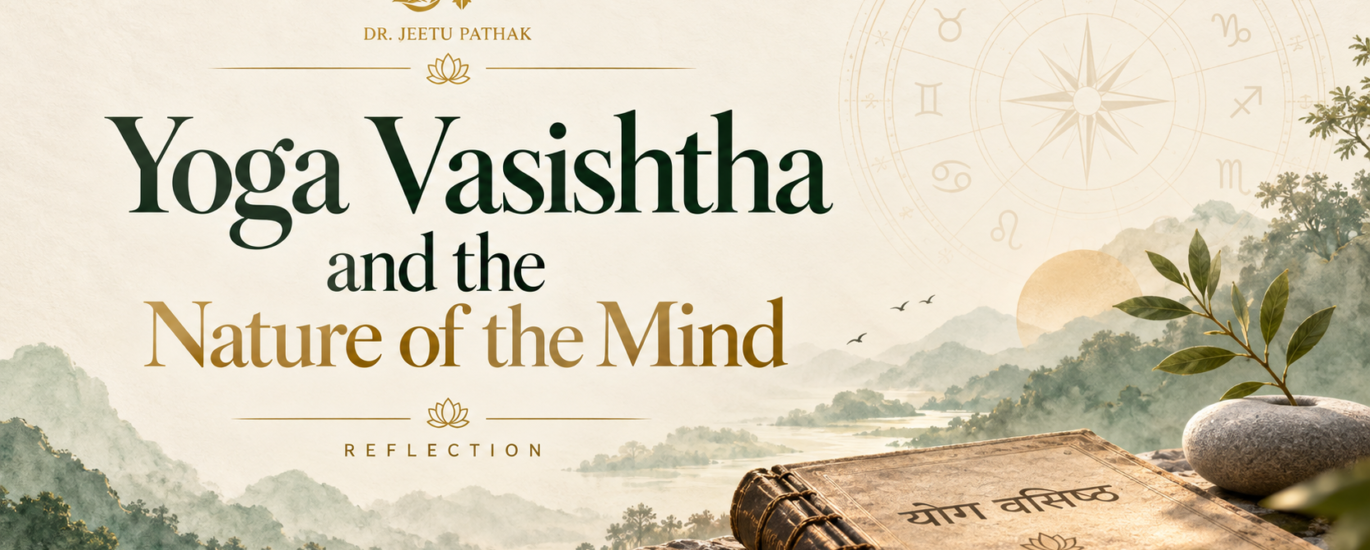
This is what the Yoga Vasishtha — one of the oldest and most profound texts of the Indian wisdom tradition — returns to again and again. Through hundreds of stories, parables and teachings, it points to a single truth: the mind, left to its own nature, creates a world. And we mistake that created world for the actual one.
The stories in the Yoga Vasishtha are remarkable. A prince, a sage, a crow, an infinite series of nested realities — each parable is a different way of showing the mind’s creative power and its capacity to imprison us in what it has created. But they are also showing us something more liberating: that the one who witnesses the story is never inside it. That there is a dimension of our being that watches the mind’s performances without being caught in them.
This witnessing — this capacity to step back from the narrative and rest in awareness itself — is what the Yoga Vasishtha is quietly pointing toward in every page.
This book has been my companion for fifteen years and is still running. Two or three pages at a time, and just let it settle within you. Because the teaching does not arrive all at once, it settles slowly. It works on you over years and then something loosens in the relationship between you and the mind’s endless movement.
Then you begin to notice your mind’s stories as stories. And in that noticing — a kind of freedom begins.
For reflections on this journey and on how the Yoga Vasishtha became my companion, I invite you to read Until the Fire.